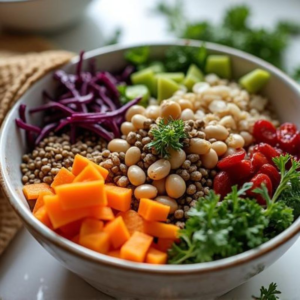

Nutrition is one of the noisiest corners of the wellness world. One day a food is a miracle, the next day it’s a menace, and somehow we’re all supposed to keep up. It’s no wonder so many people feel overwhelmed, confused, or simply exhausted by trying to “eat right.”
The truth we are all craving, but rarely is said out loud:
Most of us don’t need more rules, we need more understanding.
Wellbeing begins with clarity, not perfection. When we can view food through a calm, evidence-based lens, everything gets a little lighter.
I created the Nourish With Clarity series to serve as a, grounded look at what we actually know about food, nutrition, and being human in 2025. No fear tactics, fads, “shoulds,” or pressure. I’m not here to sell or convert. Just real information for real life.
In this series, we’ll explore:
Part 1: What updated research tells us about eating well today.
Part 2: Why our culture is obsessed with protein (and what the science really says).
Part 3: How ultra-processed or “high-reward” foods interact with the brain, and why cravings aren’t a character flaw.
Each part is designed to give you a clearer picture of how food supports your body, mind, and everyday life. My hope for you is to leave a little more informed, and lot more empowered, towards the next chapter of your wellness journey.
Before we zoom in on protein or cravings, it helps to understand what decades of nutrition research, consistently shows about how food shapes wellbeing.
It might sound like a lot, but you’re not alone. I’m here to walk you through the tangled swamp of information, to find the fresh blooms you need to thrive.
Welcome to Nourish With Clarity: Part 1
What We Really Know About Eating Well in 2025
If you’ve ever felt like nutrition advice changes every five minutes, you’re not imagining it. Headlines can make it seem like yesterday’s “superfood” is today’s super-villain — and that the guidelines for eating well are constantly shifting. But, when we step back from the noise and look at the total body of high-quality research, the picture comes into focus. Science has revealed the truth with consistency, more than most of us realize.
The good news:
We know far more about long-term health than the headlines imply, and the fundamentals haven’t changed.
What has changed is the strength of the evidence, and our deeper understanding of how food influences both the body and the brain.
What does the best research in 2025 truly show about eating for health, energy, longevity, and mental clarity?
Let’s start with the big picture.
What Nutrition Science Consistently Shows
Before we get lost in the weeds of macro and micro nutrients, or the latest wellness trends, let’s give ourselves a little altitude and look at the whole landscape. When we look at decades of high-quality research, from large population studies, clinical trials, and longevity data, an unmistakable pattern emerges.
Nutrition science is more consistent than confusing. Across countries, ages, lifestyles, and research methods, a resounding framework of truth has revealed itself.
Whole, Minimally Processed Plant Foods Support Long-Term Health
Think vegetables, fruits, whole grains, beans, lentils, nuts, seeds, herbs, and spices, as close to their natural state as possible. If it comes from a plant, eat it; if it’s made in a plant, don’t.
It’s not about perfection. It’s about what you choose most of the time.
Fiber is Foundational
Most Americans get half the dietary fiber they need, and this gap affects everything from digestion to mental clarity to blood sugar regulation.
Where do we get fiber? Plants. Only plants.
If you’re curious how fiber supports focus, and mental clarity, I break it down here: Eat This for Focus, Not Just Fiber.
Ultra-Processed Foods Work Against Metabolic and Emotional Wellbeing
Processed foods are engineered for one outcome: overconsumption.
Ultra-processed foods (UPFs), are designed to be especially rewarding. These high-reward foods work against the body’s natural appetite signals and energy regulation.
The body is complex, and high-reward foods interact with it in complex ways. Food engineering can shape biology long after a meal is over. When we understand the “why,” behavior starts to make more sense. We explore this further in [link].
The Big Picture Matters More Than a Single Nutrient
Protein, carbs, and fats all matter, but not the way headlines suggest. People thrive on a variety of eating styles across cultures, climates, and generations. The common thread isn’t the ratio of macros. Humans have thrived for centuries without this knowledge.
Strive for a dietary pattern that is:
- High in whole plant foods; the more plants on your plate, the better.
- Low in processed food products. Convenience foods are well — convenient but keep the trade off in mind.
- Flexible and sustainable; a variety of foods you will actually eat.
- Supports metabolic and emotional wellbeing, meaning stable energy, steadier mood, and less blood-sugar rollercoaster.
In other words: Consistency (how you eat 80% of the time) has more impact than than one-off moments.
Food Affects the Brain Just as Much as the Body
This is an exciting area of modern research. A consistent pattern links plant-forward, minimally processed diets with:
- Better mood, emotional steadiness
- Less anxiety
- Sharper cognition
- Improved focus
- Reduced risk of depression
- Lower inflammation affecting brain health
Food doesn’t only nourish the body, it fuels brain chemistry. This is powerful information.
Not Perfection, but Clarity
Nutrition is full of nuance, but you don’t need a PhD to eat well. The fundamentals are clear:
- Choose foods close to their natural form; raw or cooked whole food is the focus.
- Build meals around plants.
- Make room for ease and flexibility, give yourself grace. Start small. There’s science behind starting small. Explore how small wins build big momentum here, The Science of Small Wins: Progress, Not Perfection.
- Make space for whole foods at every meal.
When we anchor ourselves in what the evidence truly shows, eating well becomes something you can navigate with confidence and ease.
Updated Findings (2015–2025): What’s New and Why It Matters

When scientists set out to answer the question, “What helps people live longer and healthier?” consistent truths resurface. In the last decade findings have reinforced these truths offering stronger and more detailed clarity.
New Data From Major Research Hubs
Recent studies, including large-scale research at institutions like Harvard T.H. Chan School of Public Health in 2025, show individuals who follow diets centered on whole, minimally processed plant foods have a significantly higher likelihood of reaching age 70+ without major chronic disease.
Again, this isn’t about eating the perfect diet; it’s about having a consistent intake of nourishment, day after day.
- Harvard T.H. Chan School of Public Health. Healthy eating in midlife linked to overall healthy aging. Harvard T.H. Chan School of Public Health News, 2025.
Real-World Proof From Longevity Hotspots
In the famed Blue Zones, regions where people live well into their 100s with good health, eating patterns share key features: abundant beans/legumes, whole grains, vegetables, minimal processed meat, and moderate or no dairy.
These real-life models confirm what the research is telling us: long-term health isn’t magic. It’s patterns.
What These Findings Mean for you
- Your health is shaped less by superfood moments and more by your everyday meals.
- A diet rich in whole plant-foods isn’t restrictive, it’s protective.
- The real win isn’t just living longer, it’s living better, with more energy, more balance, and less detours to the doctor’s office.
Why This Matters now
With wellness trends multiplying by the minute, it’s tempting to chase whatever’s new. But the real magic isn’t in novelty, it’s in steady, nourishing patterns. Every time you choose whole, plant-rich foods, you’re quietly supporting the future version of you.
Ultra-Processed Foods (UPFs)

An area of nutrition research that has taken off in the last decade, is the study of ultra-processed foods. These aren’t just “processed” in the everyday sense, they’re industrial formulations designed to be hyper-palatable, shelf-stable, and hard to stop eating. The more we learn, the clearer the pattern becomes.
UPFs are now Linked to More Than 30 Health Conditions
Large-scale studies between 2018 and 2025 have connected high UPF intake with greater risk of:
- Metabolic conditions, such as type 2 diabetes and fatty liver disease
- Cardiovascular disease
- Certain cancers
- Anxiety and depression
- Poor sleep
- Increased inflammation, the foundation of most disease
- Cognitive decline, dementia
- Weight gain unrelated to calorie counts alone
What’s striking is how consistent these associations are across age groups, cultures, lifestyles, and study designs.
This topic can feel like a rabbit hole, especially if processed foods were part of your upbringing. There’s no villain here, just growth in understanding. My hope is to inform, empowering you to make the best decisions about food, for you.
UPFs are engineered to be compelling and irresistible. Biology is doing exactly what biology does in response. We are hardwired for hunting and gathering and taking advantage of calorie dense foods whenever possible. That instinct is genius in an environment of scarcity, and treacherous in one of abundance.
It’s not Just What UPFs add, It’s What They Crowd out
A compounding issue following additives, flavor enhancers, and food engineering is: the more UPFs we eat, the fewer whole, fiber-rich foods we have room for. Crowding out necessary amounts of:
- Fiber
- Phytonutrients
- Antioxidants
- Healthy fats
- Vitamins + minerals
UPFs digest quickly, spike blood sugar, and override fullness cues, which makes it easy to overeat without feeling satisfied. This leaves us overfed and undernourished.
The good news is that rebalancing doesn’t require an overhaul. Small, intentional changes can shift the pattern in a gentler, more sustainable way.
Upgrading one ingredient in a favorite recipe. Swapping a few meals each week. Boosting fiber at breakfast. Adding more plants to familiar dishes. The small actions can gently rebalance your eating pattern without drastic, difficult to manage, lifestyle upheaval.
Gut Microbiome Insights
One of the biggest breakthroughs in nutrition over the past decade has come from the tiny universe inside us: the gut microbiome. It turns out the trillions of microbes living in our digestive tract play a major role in everything from digestion, to immunity, to mood. What we eat shapes that ecosystem.
Diversity is Key and Plants Provide it
Research confirms a simple truth: The wider the variety of plants we eat, the more diverse our gut microbiome becomes. This diversity is strongly linked with better health.
But don’t panic, complicated recipes or obscure ingredients aren’t required. Build daily nutrition on a variety of:
- Fruits
- Vegetables
- Beans + lentils
- Whole grains
- Nuts + seeds
- Herbs + spices
Strive for a variety of colors, textures, and flavors.
The “30 Plants per Week” Guideline has Real Science Behind it
This idea came from the The Microsetta Initiative (formerly called The American Gut Project) and has held up through multiple follow-up studies. People who include roughly 30 different plant foods a week experience:
- Better digestion
- Lower inflammation
- Improved metabolic markers
- Stronger immune function
- More resilient gut health
It’s about expanding your diet, not restricting it.
Fiber is Fuel Your Microbes are Begging for.
Fiber isn’t just a “regulatory” nutrient, it’s food for your microbiome.
When microbes ferment fiber, they produce compounds like short-chain fatty acids, which promote:
- Steadier blood sugar
- Calmer immune responses
- Healthier body weight
- Improved mood
- Lower inflammation overall
And again, fiber comes from plants. This matters for wellbeing, not just digestion, a healthy microbiome influences far more than your belly.
Research now connects gut health to:
- Mood stability
- Mental clarity
- Stress resilience
- Reduced anxiety
- Improved metabolic health
The gut and brain are constantly in conversation. What you feed one affects the other. Ever had a “gut-feeling” about something? There is more involved than just your last meal.
You don’t need a gut-reset program or a strict routine. Just more plants, more often, and more variety. Simple, but maybe not easy. Remember, small shifts tend to become lasting habits:
- A handful of berries
- A sprinkle of seeds
- A side of beans
- Mixed greens instead of one lettuce (reach for romaine over iceberg)
- Fresh herbs in cooking
All have a meaningful impact in supporting the ecosystem inside you.
Animal Protein & Chronic Disease
Animal protein is one of the most debated topics in nutrition and arguably the most misunderstood. A decade ago, the conversation was dominated by big, bold claims. Today, the research picture is more nuanced but also more consistent and reassuring: you don’t have to be plant exclusive to see the benefits of eating more plants.
And if you opt to include animal protein, choose it mindfully rather than following the cultural pressure to chase more protein at all costs. We’ll unpack this more in Part 2 of the Nourish With Clarity series.
Environmental & Planetary Health
A growing body of research, including the EAT-Lancet Commission, highlights a simple truth: Foods that support human health support planetary health too.
Plant Based dietary patterns:
- Use fewer resources
- Generate fewer emissions
- Promote long-term sustainability
This doesn’t mean everyone must eat the same way or adopt a strict label. It simply reinforces the connection: what’s healthier for our bodies aligns with what’s healthier for our Earth. Win-Win, and incidentally, word to your mother—wink.
What Hasn’t Held Up Over Time
Many assumptions that shaped early nutrition conversations haven’t fully stood the test of time.
For example: Vegan or plant-based ≠ automatically healthy. Highly processed plant-based foods can be just as nutrient-poor, and just as engineered for overconsumption, as their animal-based counterparts. Example: french fries and a soda is 100% vegan.
Modern research is clearer than ever.
Today’s evidence reinforces a balanced, whole-food, plant-rich approach, without strict rules, labels, or perfection.
Focus on overall food quality. Whole, minimally processed plant foods consistently support better health outcomes than ultra-processed foods.
This nuance matters because it brings the conversation back to real-life eating, not diet identities.
What Today’s Evidence Confirms
Large-scale studies from Harvard University, Stanford University, the Blue Zones research team, and global health organizations now echo the same theme: whole-food, plant-forward eating supports longevity, metabolic health, brain health, and emotional wellbeing.
The real win isn’t just living longer, it’s living better.
Why Whole Food, Plant Forward Remains Powerful
Consistent inclusion of whole food it’s not a trend, it’s a pattern that consistently shows up in the healthiest, longest-lived populations across the world.
It’s flexible.
It’s accessible.
And it works.
This series isn’t about strict rules or purity culture. It’s about clarity, the kind that helps you make confident choices, not pressured ones.
Our understanding has evolved, but the core truth remains: whole, plant-rich eating supports long-term wellbeing.
Wit & Wellness™ Takeaways
After all the noise, research, headlines, trends, and food wars, it comes down to simple, steady truths that support your body, your brain, and your wellbeing.
Core concepts & real-life takeaways:
- Eat more plants. They’re nourishing, protective, and endlessly versatile.
- Prioritize fiber. It’s the quiet hero behind better digestion, steadier energy, and a healthier gut.
- Choose minimally processed foods most of the time. Perfection isn’t the goal, consistency is.
- Mix in variety, especially for gut health. Different plants → different fibers → a more resilient microbiome = shiny happy people.
Be compassionate with yourself. Food is woven into emotion, memory, and culture. When we approach it with kindness, change unfolds organically.
And above all: progress over perfection. Small shifts create big momentum.
Next Steps
If you feel inspired to make a few small shifts, here are a few suggestions to get the ball rolling and gently nudge your wellness journey forward.
- Add one plant-forward meal this week
- Do a quick “fiber check” on a favorite meal and plan a boost the next time you make it (beans, berries, greens, whole grains)
- Try a new plant this week — fruits, veggies, herbs, whole grains, or legumes
- Swap one ultra-processed favorite for a whole-food version you enjoy
- Experiment with a satisfying bean or lentil dish
- Add nuts or seeds to one snack or meal
Nutrition gets loud in a hurry and suddenly you feel like you need a whole new lifestyle by Tuesday. Rest assured, you don’t. Just small, steady choices you can return to with ease.
Wellness isn’t an event, and “healthy” isn’t a diet, it’s a way of being.
And this is just the beginning.
In Part 2, we’ll unpack one of the most misunderstood topics in the wellness world: Protein.
You’re doing great. Let’s keep going.
Preview of Part 2
Next up: We’ll tackle the protein panic. Why Americans are obsessed with it, what the science really says, and how to meet your protein needs without the cultural pressure or the fear.
Evidence Notes
Whole-food, plant-forward eating & longevity
- Willett W et al. Food in the Anthropocene (EAT-Lancet Commission). The Lancet, 2019.
- Satija A et al. Plant-based diets and risk of cardiovascular disease. JACC, 2017.
- Kim H et al. Plant-based diets and mortality. JAMA Internal Medicine, 2019.
Fiber & metabolic health
- Reynolds A et al. Carbohydrate quality and human health. The Lancet, 2019.
- Slavin JL. Dietary fiber and body weight. Nutrition, 2005.
Ultra-processed foods
- Monteiro CA et al. Ultra-processed foods and health outcomes. BMJ, 2019.
- Srour B et al. Ultra-processed food intake and cancer risk. BMJ, 2018.
Gut microbiome & plant diversity
- McDonald D et al. American Gut: an open platform for citizen microbiome research. mSystems, 2018.
- Deehan EC & Walter J. The fiber–microbiota axis. Trends in Endocrinology & Metabolism, 2016.
Short-chain fatty acids
- Koh A et al. Role of gut microbiota in energy metabolism. Cell, 2016.
Brain health & diet
- Jacka FN et al. Diet quality and depression. BMC Medicine, 2017.
Blue Zones
- Buettner D. The Blue Zones. National Geographic.
Planetary health
- EAT-Lancet Commission, 2019.