Modern wellness has become a remarkably solo endeavor.
We track steps, optimize our sleep, manage stress responses, curate our meals, and learn to self-regulate. All important, all valuable. But somewhere along the way, wellness quietly drifted into something we seem to do mostly alone.
And yet, one of the most powerful drivers of wellbeing isn’t a habit, a supplement, or a routine.
It’s community.
Wellness Was Never Meant to Be a Solo Sport
For most of human history, health didn’t exist in isolation. Survival, care, meaning, and resilience were shared experiences, shaped by family systems, villages, faith groups, trade circles, and friendships.
Today, many of us are doing more inner work, but without the outer support.
We’re not failing at wellness.
We’re missing a nutrient.
What the Evidence Says About Community & Wellbeing
Research across psychology, public health, and longevity science is remarkably consistent on this point. Strong social connections are associated with:
- Lower all-cause mortality, comparable to quitting smoking.
- Improved immune function.
- Lower rates of depression and anxiety.
- Greater resilience during stress and illness.
Conversely, chronic loneliness and social isolation are linked to:
- Increased cardiovascular risk.
- Higher inflammation markers.
- Poorer mental health outcomes.
- Cognitive decline over time.
Connection isn’t a personality preference, it’s a biological need. Community isn’t a “nice to have”; it belongs alongside nourishment, sleep, and movement as a foundational element of wellbeing. This isn’t about personality. It’s about biology.
Community Regulates More Than Feelings
Connection doesn’t only make us feel better, it helps regulate the nervous system. Safe, supportive relationships:
- Reduce stress hormone output.
- Increase feelings of safety.
- Help the brain move out of a stress-reactive mode.
- Support emotional regulation and recovery.
This process is called co-regulation, the nervous system’s ability to settle in the presence of trusted others. It’s one reason a conversation with the right person can calm you faster than any breathing exercise.
Community doesn’t mean constant togetherness. It means not carrying everything alone.
The Changing Landscape of Community
If building or maintaining connection feels difficult, you’re not imagining it. Modern life creates friction for community:
- Busy schedules and competing responsibilities.
- Geographic distance and frequent transitions.
- Burnout and emotional fatigue.
- Pressure towards achievement.
Add to that a culture that values independence and self-sufficiency, and it’s no surprise many people feel disconnected, even while doing “everything right” for their health.
This isn’t a personal failure. It’s a structural one.
Social Media as a Tool, Not a Substitute
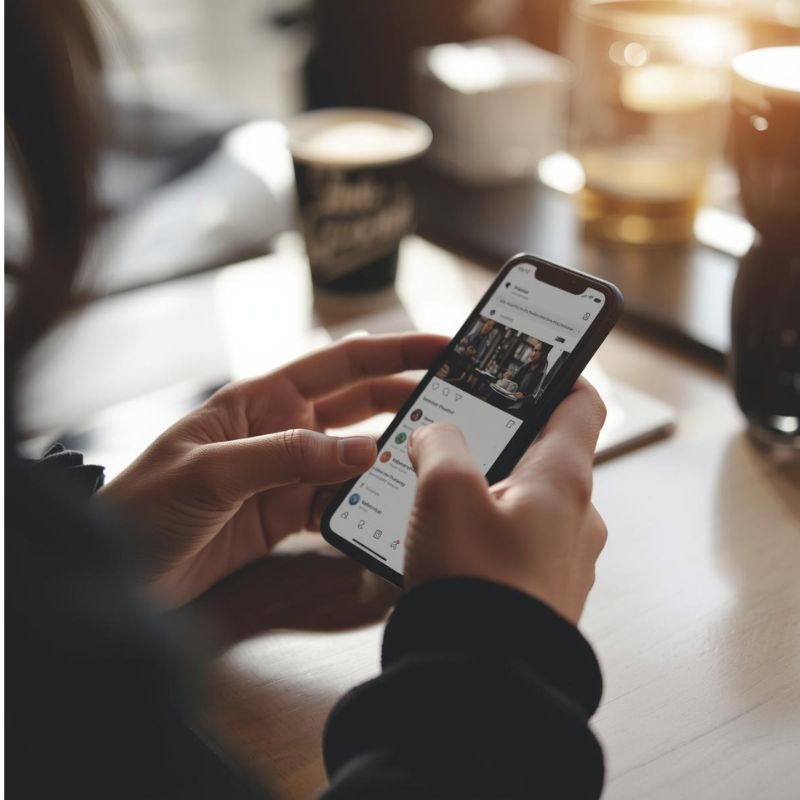
Social media complicates the picture of community, not because it replaces connection, but because it changes how we experience it.
Used intentionally, digital platforms can play a supportive role. Evidence suggests they can help people maintain existing relationships, offer connection during transitions or illness, and create a sense of shared experience. This is especially true when distance or circumstance limits in-person contact.
But research also makes an important distinction between how platforms are used and how often.
Passive use, such as scrolling, observing, and consuming content without interacting, is consistently associated with:
- Increased comparison.
- Lower mood.
- A weaker sense of belonging.
These effects can show up even when total time spent online isn’t especially high.
Heavy use, shows more mixed outcomes. When that time includes meaningful interaction, such as conversation, messaging, or shared engagement, the impact on wellbeing is less clear.
However, when heavy use is mostly passive, it is more strongly linked to:
- Loneliness.
- Disrupted sleep.
- Emotional fatigue.
In other words, the strongest negative effects tend to appear when use is both heavy and passive. It’s not just how much time is spent online, it’s how the time is spent.
Taken together, this helps explain why social media can feel connecting at times, and draining at others. This distinction matters. Social media can support connection, but it rarely replaces it.
Scrolling, liking, and observing are not the same as being seen, heard, and known. Digital contact can supplement community, but it struggles to substitute for embodied, reciprocal relationships.
A video call may offer more connection than a text. A text may offer more connection than silence. But neither fully replaces the experience of being with others, sharing space, presence, and attention in real time.
Redefining Community for Real Life
Community doesn’t have to be:
- Large.
- Constant.
- Emotionally intense.
- Perfectly aligned.
It can be:
- One person you trust.
- A shared routine or ritual.
- Consistent, low-pressure contact.
- Spaces where you don’t have to perform.
Community is built in small, ordinary moments, not grand gestures.
A neighbor you check in on.
A walking partner.
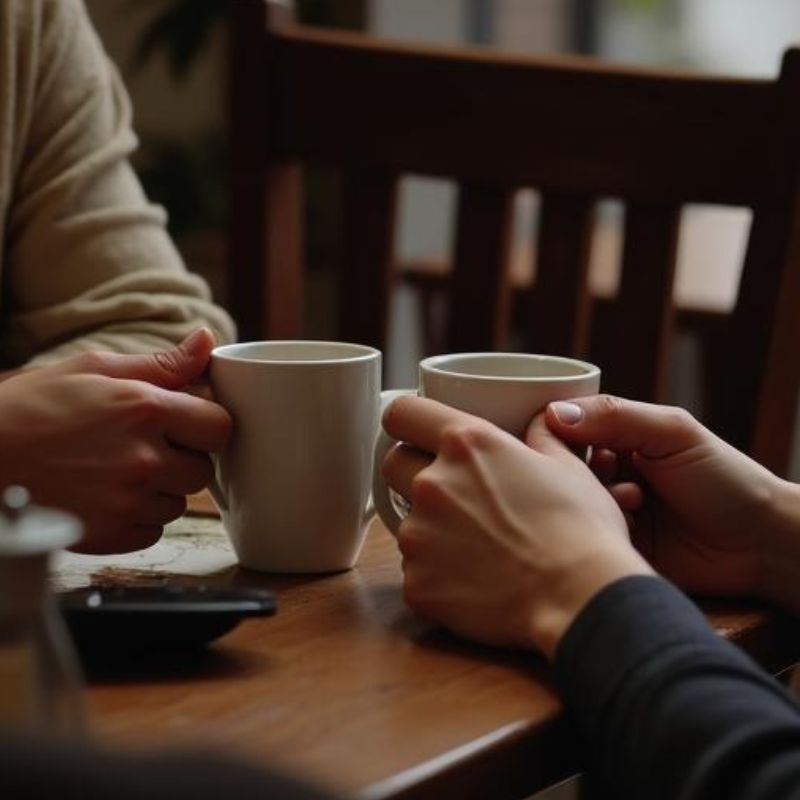
A standing coffee date.
A group that shares values, not perfection.
Connection Is Part of Caring for Yourself
Wellness culture often frames self-care as something we do for ourselves. But some of the most regulating, protective, and sustaining forms of care happen between us.
You don’t need to overhaul your social life.
You don’t need to become more outgoing.
You don’t need a crowd.
You are allowed to treat connection as a legitimate part of your wellbeing, not an afterthought. Not a reward. Not a weakness.
Wellness isn’t just something you practice alone. It’s something that grows through relationships.
That’s why community belongs at Wit & Wellness, a place for shared learning, support, and steady growth.
Evidence Notes
Social connection and mortality
- Holt-Lunstad J, Smith TB, Layton JB. Social Relationships and Mortality Risk: A Meta-analytic Review. PLOS Medicine, 2010.
Loneliness, inflammation, and cardiovascular health
- Steptoe A, Shankar A, Demakakos P, Wardle J. Social Isolation, Loneliness, and All-Cause Mortality in Older Men and Women. PNAS, 2013.
- Hawkley LC, Cacioppo JT. Loneliness Matters: A Theoretical and Empirical Review of Consequences and Mechanisms. Annals of Behavioral Medicine, 2010.
Mental health and emotional regulation
- Cacioppo JT, Cacioppo S. Loneliness in the Modern Age: An Evolutionary Theory of Loneliness. Advances in Experimental Social Psychology, 2018.
Cognitive decline and social isolation
- Kuiper et al. Social relationships and cognitive decline: a systematic review and meta-analysis. International Journal of Epidemiology, 2016
Co-regulation and nervous system support
- Porges SW. The Polyvagal Theory. 2011.
Social media use: passive vs. active
- Verduyn P et al. Passive Facebook Usage Undermines Affective Well-Being. Journal of Experimental Psychology: General, 2015.
- Primack BA et al. Social Media Use and Perceived Social Isolation Among Young Adults in the U.S. American Journal of Preventive Medicine, 2017.